
Race Fueling for Ironman Chattanooga: What Actually Works on Race Day
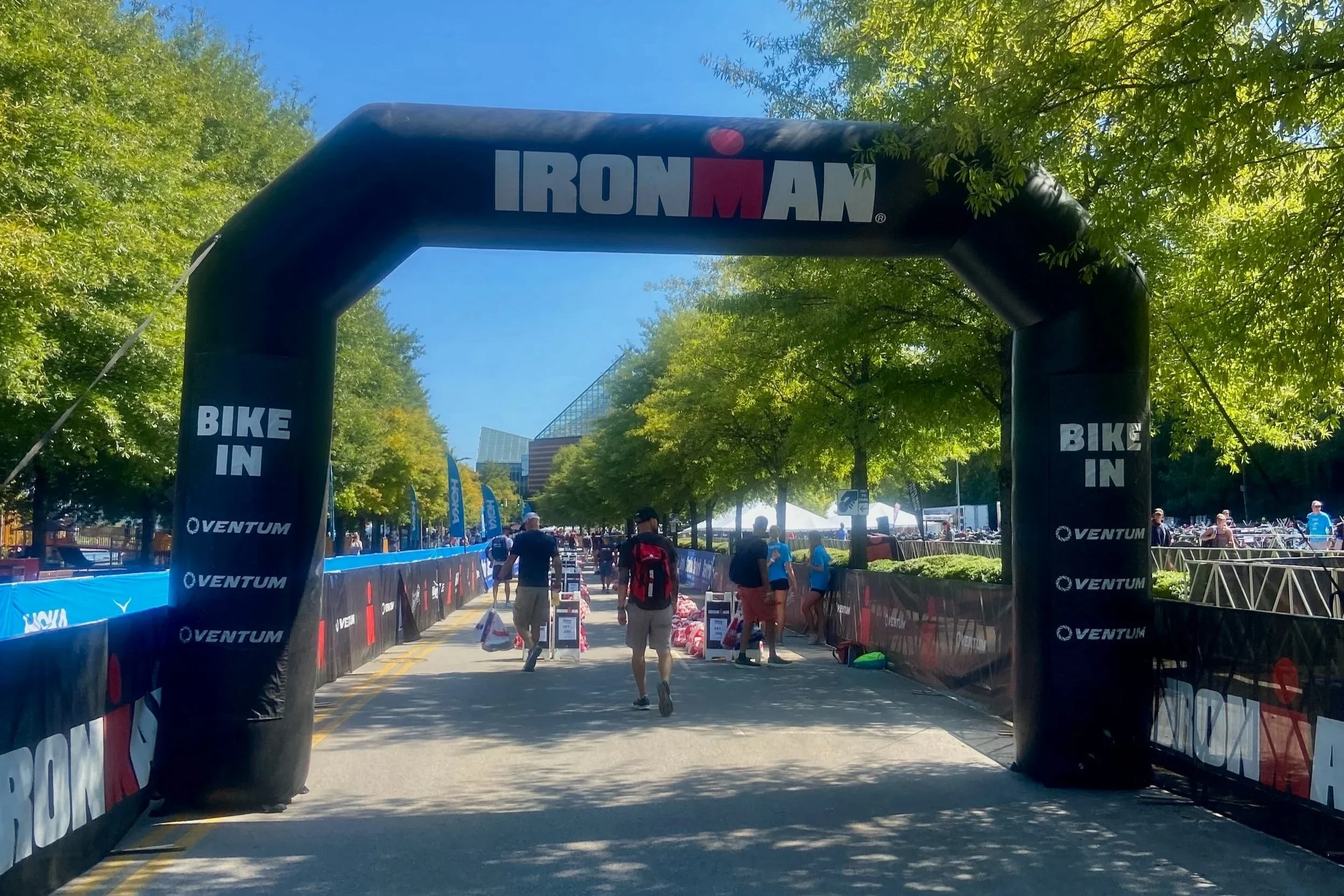
Bike in arch, Ironman Chattanooga
You've put in the miles. You've done the long rides in the heat, the brick workouts, the open water swims in the Tennessee River. Race day is five weeks out.
But if you haven't practiced your nutrition with the same intention you've put into your training, you're leaving one of the biggest performance levers untouched.
I've done five iron-distance races, including Kona. I've blown up nutritionally and I've nailed it. Let me tell you about both.
The trail mix incident
Fall Creek Falls Half. Hot, hilly, and I decided that race day was a fine time to fuel with trail mix. Peanuts, M&Ms, raisins. Seemed reasonable at the time.
By the end of the bike I had what I can only describe as a peanut-M&M-raisin brick sitting in my stomach, full cramps, and no choice but to drop. Race over before the run even started.
I learned more from that day than from any race I finished.
The lesson isn't that trail mix is evil. The lesson is that race day is not the time to try something new, and your gut behaves very differently when you're working hard in heat than it does on an easy training day. What sounds good at mile 2 of the bike becomes a liability at mile 40.
Practice your nutrition like you practice your swimming
Most athletes treat race nutrition as an afterthought right up until taper week. If you haven't tested your gel, your hydration mix, your bike nutrition, and your run fuel during actual training at race-day intensity in race-day heat, start now. You have five weeks. Use them.
Chattanooga in May is warm and humid. That matters. Your gut tolerance changes in heat. Your sweat rate goes up. Your appetite changes. What works for you on a cool spring morning may not work at mile 80 on the bike when it's 80 degrees and you've been out there for four hours.
Calories matter more than most people want to admit
Endurance athletes are notoriously bad at eating enough on the bike. You get into a groove, you feel okay, you skip a gel. Then mile 15 of the run hits and you wonder why your legs feel like concrete.
A general starting point for most athletes is 60 to 90 grams of carbohydrate per hour on the bike. Where you land depends on your size, intensity, and gut tolerance. The point is that you need an actual number going in, not a vague plan to eat when you feel hungry. By the time you feel hungry on a full iron-distance bike course, you're already behind.
The swim-to-bike transition is your first nutrition window
Most people don't think of T1 as a nutrition moment. It is. You've just swum 2.4 miles and burned through your pre-race glycogen stores. Get something in before you're 10 miles into the bike. Have a plan and stick to it.
Sodium is not optional
Kona, mile 30 out of T2. I'm on the Queen K Highway, which if you've never been there, is flat, hot, and notoriously windy in a way that makes every mile feel like two. I lost my salt. My inner thighs started cramping with a ferocity that made me question every decision I'd ever made. I was still on the bike. I had miles to go.
That's what sodium depletion feels like in a long-course race. And it can happen to you even if you're experienced, even if you've been drinking, even if you think you're on top of it.
At Cheaha Extreme Triathlon I had the opposite experience. I stuck to my schedule, followed my plan, and discovered the miracle of pickle juice when I needed it, thanks to my amazing crew.. That race clicked. It felt different to be on the right side of sodium management.
Your hydration plan needs electrolytes throughout the bike and run, not just water at the aid stations. The river swim, the humidity, the heat. You will sweat more than you think.
The run is where nutrition races are won and lost
By the time you're on the run course, your gut is under stress. Your body has been working for five-plus hours. A lot of athletes can tolerate gels and liquid calories on the bike but fall apart on the run. This is why you practice before race day, not during it.
Cola at the aid stations is your friend late in the run. It sounds counterintuitive but the caffeine, simple sugar, and sodium are genuinely useful when solid food sounds terrible and you still have 10 miles to go.
Race week: keep it boring
Don't do anything dramatic. Eat what you normally eat. Add extra carbohydrates in the two to three days before the race. Stay hydrated. Don't try a new restaurant the night before. The goal race week is to arrive at the start line well-fueled and unexciting from a gut perspective.
You've done the work. Trust it, fuel well, and enjoy the Tennessee River at sunrise.
Kristin Evans is a nurse practitioner and Ironman World Championship finisher offering nutrition coaching through Groundwork Health. Learn more at groundwork-health.com.
